It remembers them so your staff don't have to.
A guest scans a QR with their phone camera and their whole history is there — what they've smoked, what they've saved, what they ordered last time. No app, no password.
Most lounges know their regulars by face and lose everything the moment that person isn't working. This turns recognition into something your business owns.
Two ways back in
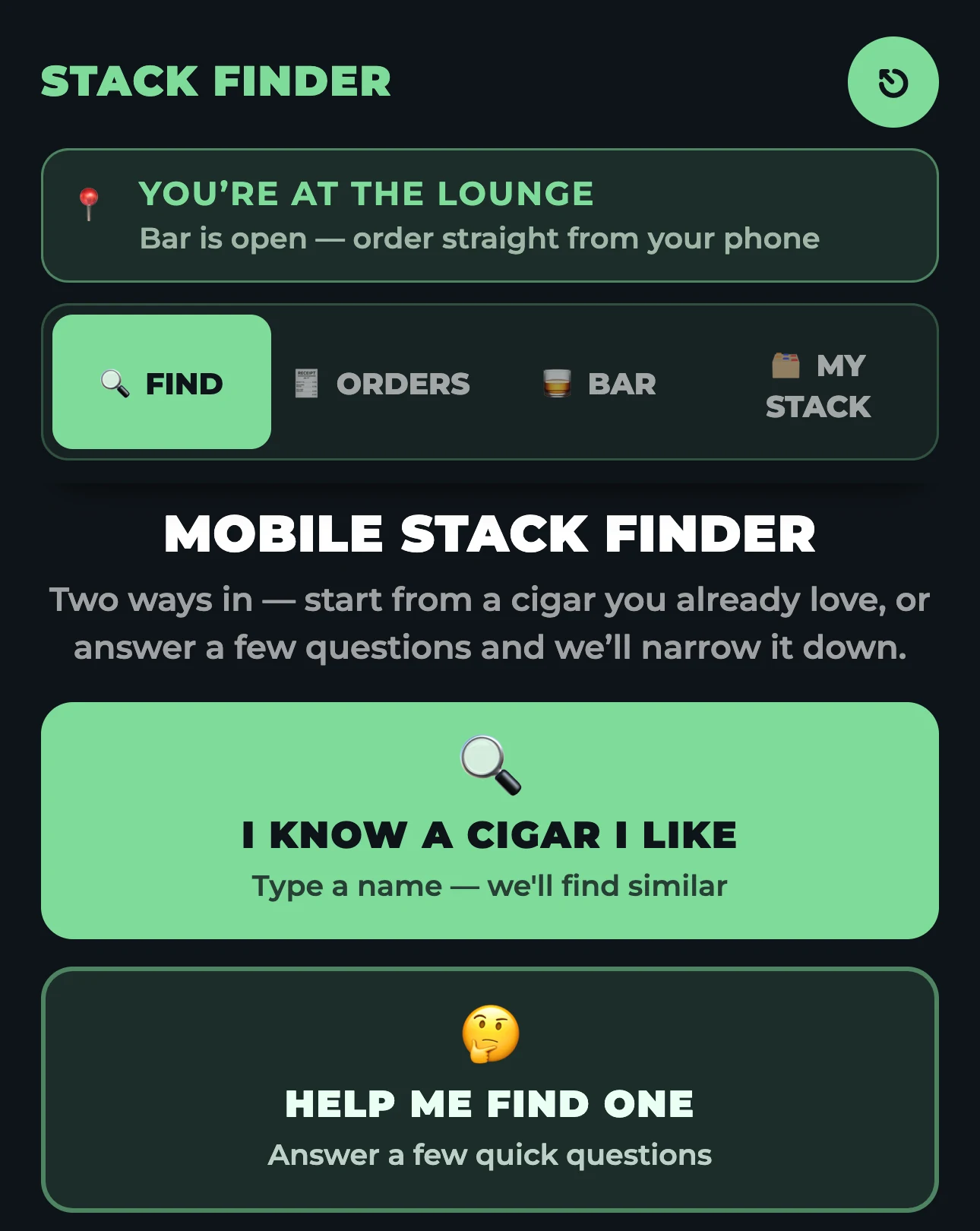
Point a phone camera at the QR on the kiosk, or just tap in a phone number on the keypad. Nothing installed, no password to remember.
Welcome back by name
A returning guest is greeted by name and picks up where they left off, instead of starting from a blank screen every visit.
Their list goes home with them
The cigars they saved and the ticket they ordered leave with them on their phone — which is what makes them come back to you rather than a national site.
Why a QR and not an account
Asking a guest to create an account on a shared iPad in a lounge is how you lose them. Passwords on a public screen are a bad idea for them and a support problem for you.
So the kiosk shows a QR. They point their camera at it, their profile opens on their own phone, and from then on the two are linked. Everything they do at the kiosk lands on their phone, and everything on their phone is there next time they walk up to the kiosk.
For a guest who doesn't want to reach for their phone, there's a keypad. They tap in their number, the kiosk asks “is this you?” before it shows anything, and only then unlocks their history.
That confirmation step matters on a shared screen. A phone number alone shouldn't open somebody's saved list to whoever is standing there, so the kiosk checks first — and for the full private view it still hands off to the phone by QR, because only their phone should open their cigars.
When a session ends it asks whether the next person is the same guest or a new one. A shared kiosk that quietly keeps the last person signed in is worse than one that never remembered anybody.
What you get out of it
Every saved cigar, every search and every order is attached to a person rather than evaporating at the end of the night. That's the difference between a busy floor and a customer list.
It's also what makes reordering work. A guest who can pull up the cigar they had six weeks ago will buy it again from you. A guest who only remembers “the one with the red band” will buy something else, somewhere else.
The questions this always raises.
Do they have to give an email?
Yes — that's how their ticket and their saved list reach them, and it's how you end up with a contactable customer instead of an anonymous visit. No password is ever created.
What if they don't have their phone out?
They tap their number into the keypad instead. The kiosk confirms it's them before unlocking anything, so a number on its own doesn't open somebody else's list.
What about the next guest on a shared kiosk?
When a session ends the kiosk asks whether it's the same person or a new one, rather than assuming. Nobody inherits a stranger's profile.
Whose customer data is it?
Yours. It's your guest list, captured in your lounge, and it syncs to the marketing tools you already run.
It works with the rest of it.
See it on your own inventory.
Fifteen minutes, your cigars in the kiosk, and an honest answer about whether it fits your shop.