It knows whether they're in your lounge or on their couch.
The same engine behaves differently depending on where the guest is standing — because what's useful in your humidor and what's useful at home are not the same thing.
Location-aware behavior is not something the known competitor offers.
In the lounge
Only what's in stock right now, only what you can hand over, plus the pour to go with it — and a BAR tab appears on their phone with your whole drinks list.
At home
The full catalog opens up, because a guest at home isn't waiting at the counter. The bar tab goes away entirely — you can't pour for someone who isn't there.
No wrong promises
A guest standing in front of you never gets shown something you can't produce.
Why the mode matters
The single fastest way to lose a guest's trust is to recommend something and then not have it. In-lounge mode exists to make that impossible.
At home, the opposite is true — restricting someone to today's shelf makes no sense when they're browsing on a Tuesday night and happy to wait. So the catalog widens, and a cigar they pick is reserved at your counter under a pickup code instead of rung up on the spot.
Drinks are the sharp edge. The bar tab isn't dimmed or disabled when they leave, it's gone — and the server checks the location again before it will park a drink on your bar register. If location is switched off, it refuses rather than guessing. The failure mode we chose is an extra step for the guest, never a drink poured for someone who isn't in the room.
Checked on the server, not just the phone
A browser can be told to report any location you like. If the only geofence check happened on the guest's device, in-lounge pricing and in-lounge inventory could be spoofed by anyone willing to spend two minutes in their developer tools.
So the lounge boundary is enforced server-side. The device says where it thinks it is; the server decides whether that counts.
This is why in-lounge mode can be trusted enough to hang real pricing and stock rules on it.
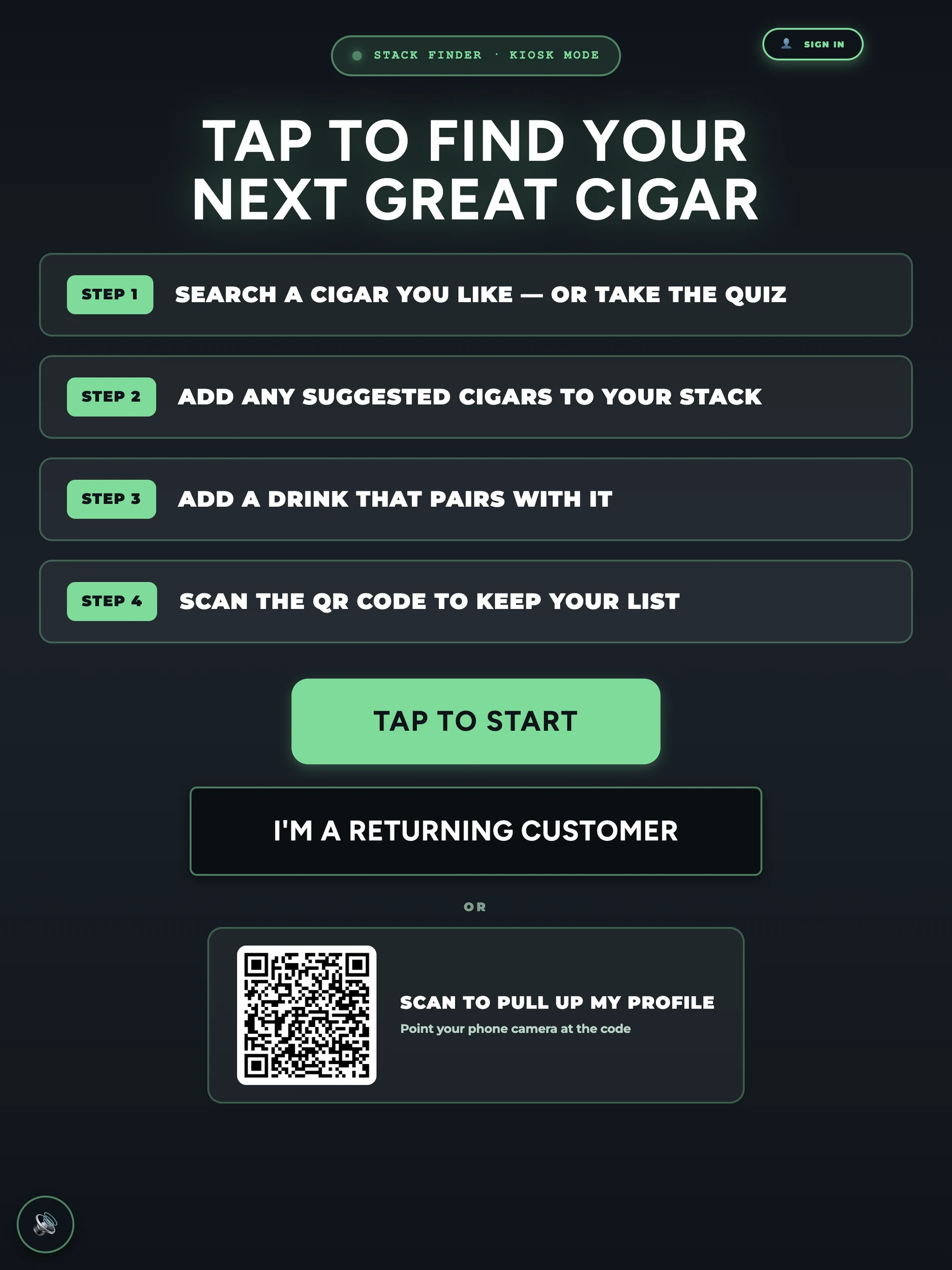
What we do with location
Location is used to decide which mode to run and which store a guest is standing in. That's it.
It is not used to build a movement profile, and it isn't sold on. The privacy page will state this in plain terms once it's written.
TODO: this section must be reviewed against the final privacy policy before launch.
The questions this always raises.
Does a guest have to share their location?
At the kiosk, no — the kiosk is in your lounge by definition. On a phone, they're asked, and declining just puts them in at-home mode.
What if I have more than one location?
Each location runs its own inventory. A guest gets the shop they're actually standing in.
It works with the rest of it.
See it on your own inventory.
Fifteen minutes, your cigars in the kiosk, and an honest answer about whether it fits your shop.